
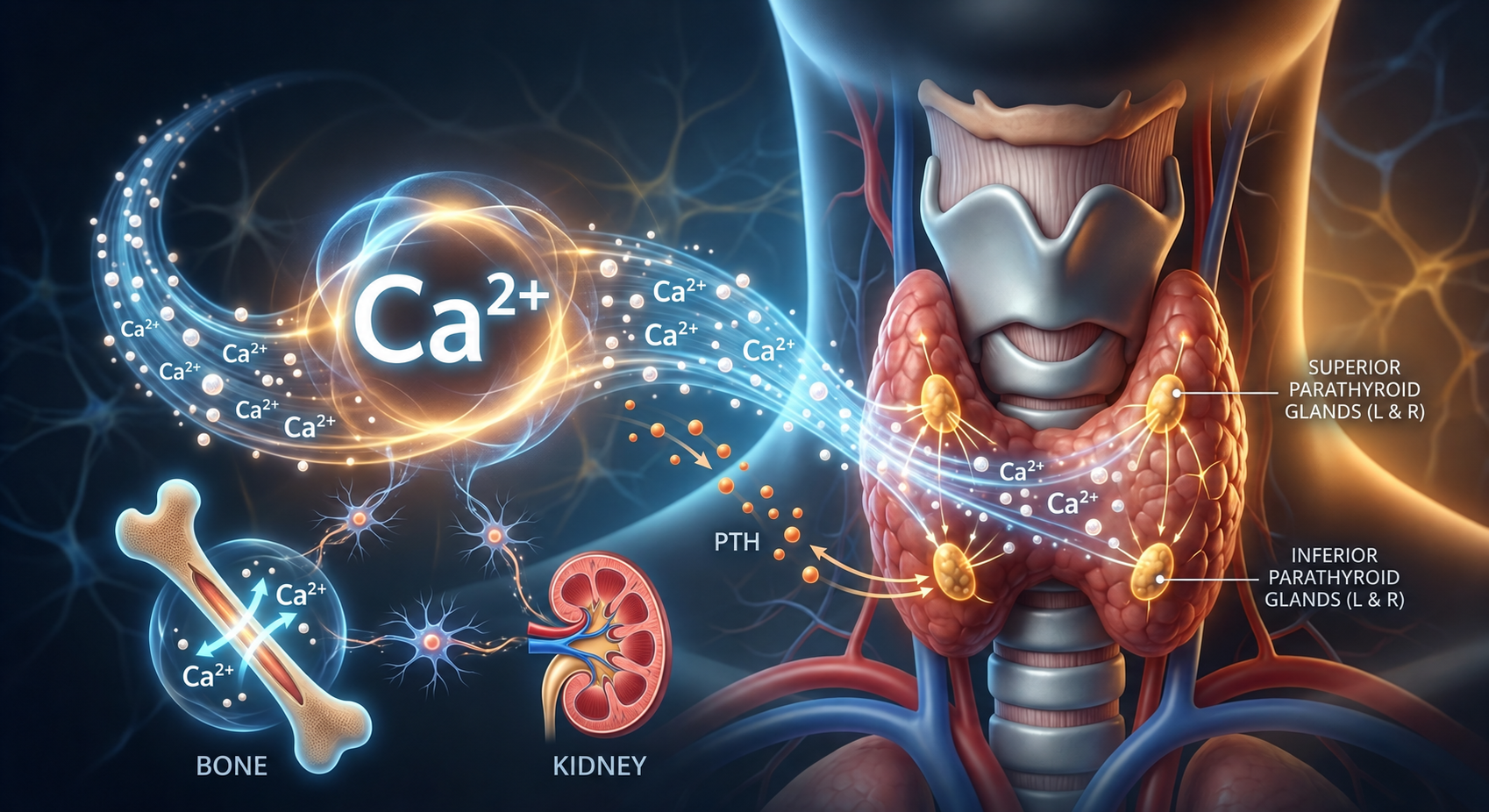
Calcium is essential for healthy bones, but it is also vital for normal nerve and muscle function. Calcium levels are regulated by the parathyroid glands—four small glands, each about the size of a grain of rice, located behind the thyroid. Their sole role is to produce parathyroid hormone in response to blood calcium levels. This hormone regulates calcium excretion through the kidneys, calcium absorption from the diet, and the continual movement of calcium between the bones and bloodstream, keeping blood calcium within a narrow normal range to support optimal nerve and muscle function.
Primary hyperparathyroidism is a condition in which one or more parathyroid glands produce too much parathyroid hormone, causing the body to maintain more calcium in the bloodstream than it needs. The most common cause is a benign tumour called an adenoma. Some patients may have two adenomas or enlargement of all four glands, known as parathyroid hyperplasia, which can sometimes run in families. Although parathyroid tumours can be malignant, this is exceptionally rare.
Because calcium is critical for normal nerve and muscle function, symptoms of high calcium levels most often affect these systems. Common symptoms include fatigue, memory loss, generalised muscle aches and pains, difficulty concentrating, irritability, and sleep disturbance. Less commonly, patients may experience urinary symptoms or vague abdominal discomfort.
Hyperparathyroidism is diagnosed with simple blood tests showing elevated serum calcium and parathyroid hormone levels. In some cases, these levels may fall within the normal range but still be inappropriately high in relation to each other. Once the diagnosis is confirmed and surgery is planned, imaging tests may be used to identify which parathyroid gland is affected. These scans may include ultrasound, sestamibi scanning, and occasionally a four-dimensional CT scan.
Surgery is performed through a small incision in the neck, with careful dissection to identify the abnormal gland or glands. There are generally two approaches: a unilateral, minimally invasive procedure when the affected gland has been identified, or a four-gland exploration when this is more appropriate. Dr Bova will discuss which approach is best for you. He uses state-of-the-art recurrent laryngeal nerve monitoring to help protect the nerves that lie close to the parathyroid glands and minimise the risk of postoperative hoarseness. Most patients are discharged the following day after parathyroid surgery