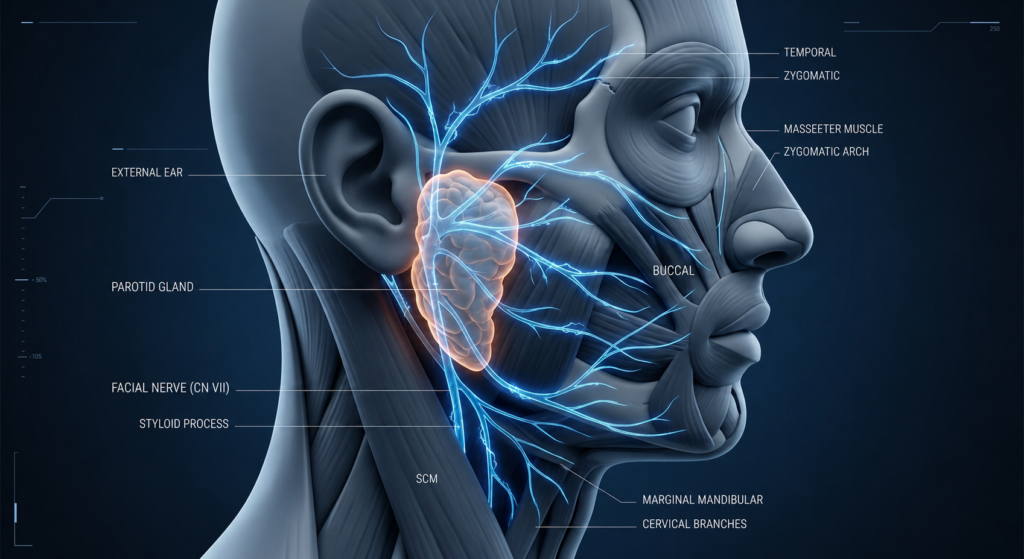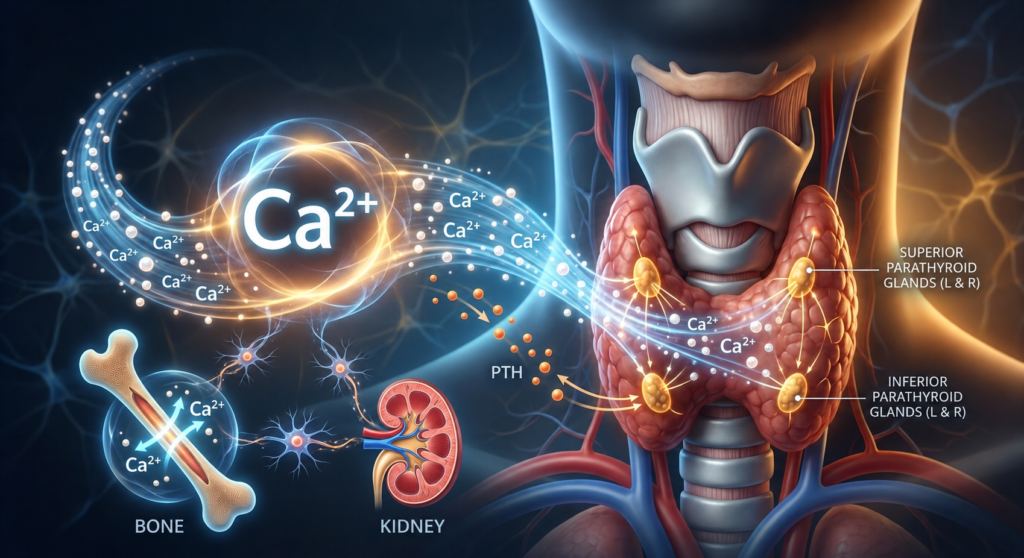


The recurrent laryngeal nerve is the main nerve to the voice box and runs directly behind the thyroid gland.
Recurrent laryngeal nerve injury is one of the most significant complications of thyroid surgery, as it can affect voice, swallowing and, rarely, airway safety.
Dr Bova is a specialist ear, nose and throat surgeon with subspecialty expertise in thyroid, parathyroid, and head and neck cancer surgery. He understands firsthand how voice disturbance can affect wellbeing and is committed to preserving voice during thyroid and parathyroid procedures.
Intraoperative nerve monitoring (IONM) does not replace meticulous dissection or direct visual identification of the nerve. Instead, it provides real-time functional information that complements the surgeon’s anatomical assessment.
Dr Ron Bova first observed recurrent laryngeal nerve monitoring during his fellowship in the United States while visiting Professor Gregory Randolph at Massachusetts Eye and Ear Infirmary. Professor Randolph is widely regarded as a world leading academic thyroid surgeon and international expert in nerve monitoring. Since commencing practice at St Vincent’s Private Hospital, Sydney, Dr Bova has used nerve monitoring in every thyroid and parathyroid procedure he has performed, with personal experience across more than 3,000 cases.
Why monitor the nerve?
IONM helps the surgeon map and identify the recurrent laryngeal nerve and assess its function before and after dissection. It is especially valuable in higher-risk settings, including reoperative thyroid surgery, large goitres, thyroid cancer, distorted anatomy, central neck dissection, and planned bilateral or total thyroidectomy.
How it works
Dr Bova’s anaesthetists use a specially designed endotracheal or breathing tube with surface electrodes positioned at the vocal cords. Stimulation of the vagus or recurrent laryngeal nerve produces an electromyographic response from the laryngeal muscles, which is monitored by computer in the operating theatre to confirm nerve function at the end of the dissection.
A standardised approach is commonly used. At your initial consultation in the office, Dr Bova will examine your vocal cords with a small fibre-optic endoscope passed through the nose into the throat to confirm that both cords are functioning normally. This straightforward procedure takes about 30 to 60 seconds and is performed under local anaesthetic. During surgery, the recurrent laryngeal nerve is identified and stimulated to confirm function. After the thyroid section is removed, the nerve is stimulated again to confirm that it continues to function.
Clinical benefits and limitations
Evidence suggests that IONM may reduce the risk of recurrent laryngeal nerve injury, particularly transient injury and in selected high-risk cases, although findings vary across studies. It is especially useful if signal is lost during the first side of a bilateral operation, as the surgeon may choose staged surgery to reduce the risk of bilateral vocal fold paralysis.
Key Points
- Dr Bova uses recurrent laryngeal nerve monitoring for all thyroid and parathyroid surgeries.
- He has extensive experience with recurrent laryngeal nerve monitoring, having used it in more than 3,000 cases.
- As an ENT surgeon who performs thyroid surgery, he is strongly committed to voice preservation.
- Nerve monitoring supports, but does not replace, careful visual identification of the nerve and meticulous surgical technique.
- Monitoring is particularly helpful in bilateral, reoperative, malignant, bulky, or anatomically difficult thyroid surgery.
- Recurrent laryngeal nerve monitoring improves situational awareness during thyroid surgery by combining anatomical visualisation with functional feedback. When used in a standardised way by a coordinated surgical and anaesthetic team, it can support safer dissection, informed intraoperative decision-making, and better postoperative voice outcomes.